
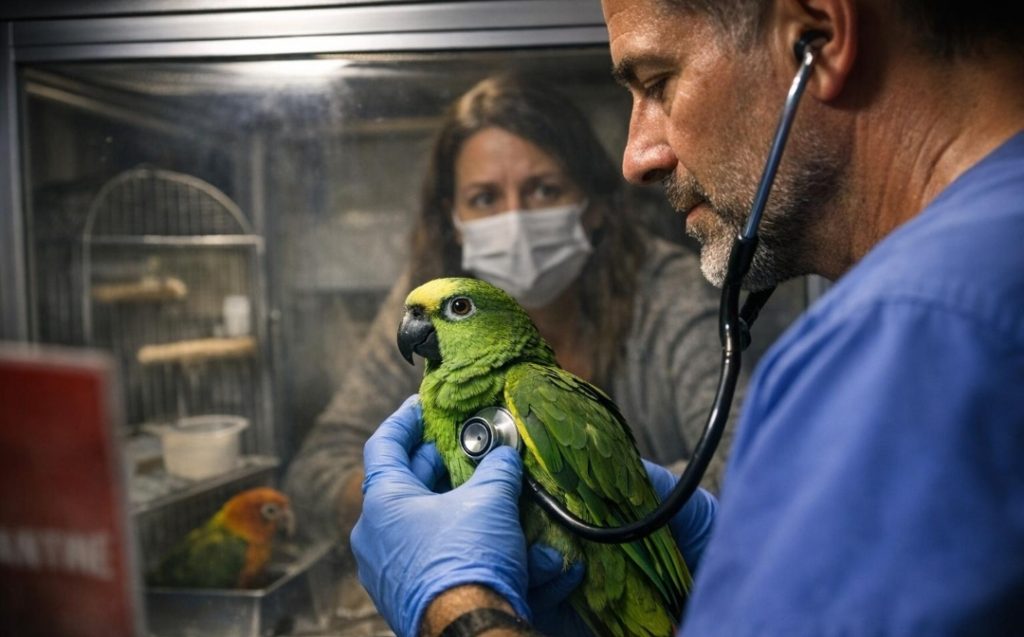
A growing number of parrots are being rescued from illegal wildlife trafficking networks operating across the US-Mexico border. The Wildlife Conservation Society’s Bronx Zoo is providing veterinary care and long-term rehabilitation for confiscated birds, highlighting the devastating consequences of the illegal exotic pet trade.
November 25, 2026 | Animals & Animal Welfare
Behind the colorful feathers and intelligent eyes of exotic parrots lies a growing wildlife trafficking problem that threatens bird populations across Central America.
Dozens of parrots recently confiscated by US authorities at the US-Mexico border are receiving specialized veterinary care through a partnership involving the Wildlife Conservation Society (WCS) and its Bronx Zoo.
The rescued birds include white-fronted Amazon parrots and orange-fronted conures, two species affected by illegal wildlife trafficking.
The latest rescue operation is part of a broader effort to prevent wild animals from entering commercial pet markets through unauthorized international trade.
According to WCS, its Bronx Zoo has assisted the US Fish and Wildlife Service with nine parrot confiscations since 2022, involving more than 50 birds representing seven species.
Some of the rescued species are classified as threatened or endangered.
Stolen From the Wild to Feed the Exotic Pet Market
Parrots are among the most recognizable victims of illegal wildlife trafficking.
Their bright colors, ability to imitate human speech, and social intelligence make them attractive to exotic pet buyers.
But capturing wild parrots for commercial purposes can have devastating consequences.
Birds may be separated from their natural social groups, transported under stressful conditions, and kept in unsuitable environments.
Young birds are particularly vulnerable during capture and transportation.
Illegal wildlife traders often prioritize profit over animal health, increasing the risk of dehydration, injury, disease, and death.
The demand for exotic pets can therefore place additional pressure on wild populations already affected by habitat destruction.
Veterinary Teams Work to Give Rescued Birds a Second Chance
Following confiscation, rescued parrots require specialized care.
At the Bronx Zoo, veterinary and animal care professionals conduct health examinations, provide treatment when necessary, and assess the birds’ long-term welfare needs.
Some animals may eventually be transferred to accredited zoological facilities where they can receive appropriate lifelong care.
Not every confiscated bird can safely return to the wild.
Animals that have experienced prolonged captivity may lose important survival skills or face health complications that make release inappropriate.
Rehabilitation decisions must therefore consider each animal’s condition, species, origin, and ability to survive independently.
The priority is ensuring that rescued animals do not become victims of another unsuitable placement.
Orange-Fronted Conures Face Additional Conservation Pressure
Among the rescued birds are orange-fronted conures, scientifically known as Eupsittula canicularis.
Native to parts of Mexico and Central America, these small parrots inhabit open woodlands, forest edges, and savanna environments.
The species is classified as Vulnerable on the IUCN Red List.
Although it was once relatively abundant across parts of its natural range, populations have declined in some locations.
Illegal trapping for the pet trade is one of the threats affecting its survival.
The rescued conures recently passed veterinary examinations and were transferred to another accredited zoo for continued professional care.
Their rehabilitation demonstrates the importance of cooperation between law enforcement agencies and institutions with specialized wildlife expertise.
The Illegal Wildlife Trade Is Bigger Than Border Smuggling
Wildlife trafficking is an international business involving capture, transportation, intermediaries, commercial networks, and consumers.
Stopping individual smugglers is important, but it does not necessarily eliminate the demand that makes illegal trafficking profitable.
Effective enforcement must also target the networks responsible for financing, organizing, and distributing illegally captured animals.
Governments need stronger border inspections, better identification systems, improved cooperation between countries, and effective prosecution of wildlife traffickers.
Consumer awareness is equally important.
Buying an exotic animal without understanding its legal origin and welfare requirements can contribute to a market that encourages wildlife exploitation.
Why Responsible Pet Ownership Matters
Parrots are intelligent, social animals with complex behavioral and environmental needs.
They require appropriate nutrition, enrichment, veterinary attention, and opportunities for social interaction.
Keeping a parrot is a long-term responsibility, not simply an opportunity to own an unusual pet.
Wild-caught parrots can experience serious stress in captivity, particularly when removed from their natural social environments.
Prospective owners should consider legally documented captive-bred animals and ensure that keeping the species is permitted under applicable wildlife regulations.
Even then, responsible ownership requires a serious commitment to the animal’s welfare throughout its life.
Protecting Wildlife Requires More Than Rescue Operations
The rescue of these parrots represents an encouraging development, but rehabilitation is only one part of the solution.
Without stronger action against illegal capture and commercial demand, wildlife rescue centers will continue receiving animals that should never have been removed from their natural habitats.
Conservation organizations, governments, zoological institutions, and local communities must work together to protect wild populations.
Efforts should focus on preventing trafficking, protecting natural habitats, supporting enforcement, and educating consumers about the consequences of illegal wildlife ownership.
The future of these birds ultimately depends on whether the international community can reduce the demand that fuels their exploitation.
A parrot rescued from an illegal trafficking network represents more than one animal saved. It is a reminder that wildlife protection must begin long before an animal is captured, transported, and sold.