
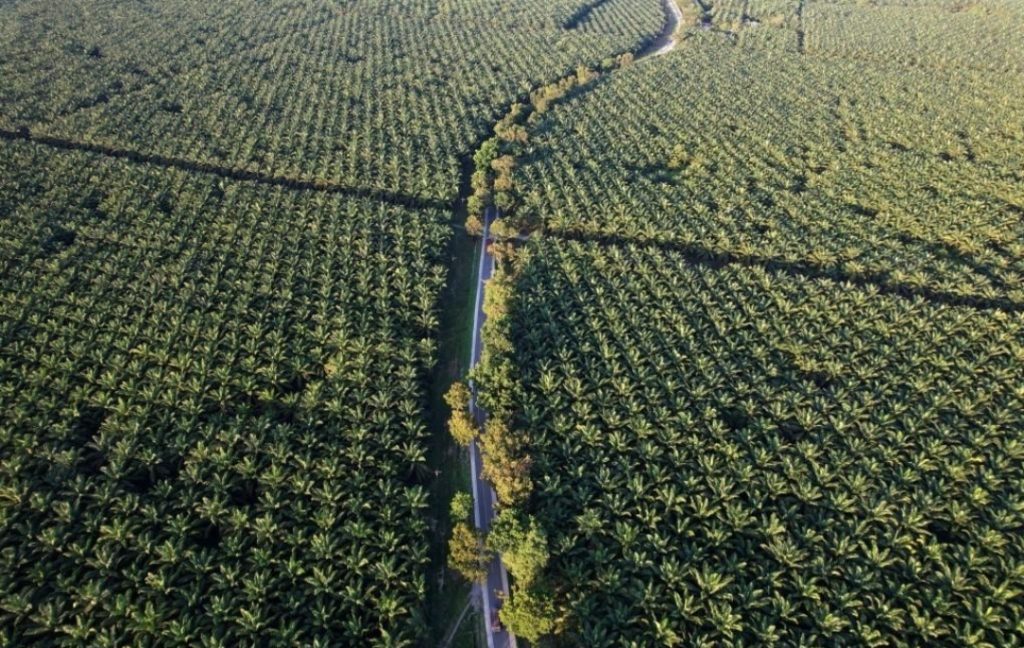
A major scientific study published in Nature has revealed how intensive agricultural expansion is fundamentally reshaping biodiversity in tropical landscapes. Researchers examining more than 40,000 species found substantial losses of biological diversity in monoculture plantations, raising serious questions about the environmental cost of converting tropical forests into large-scale agricultural production.
November 25, 2026 | Nature & Environment
Tropical forests are among the richest ecosystems on Earth. Beneath their dense canopies exists an extraordinary network of plants, insects, mammals, microorganisms, fungi, and other organisms that maintain the balance of natural ecosystems.
But when forests are transformed into intensively managed agricultural landscapes, the damage goes far beyond the disappearance of trees.
A new scientific study published in the journal Nature on November 18, 2026, provides fresh evidence of how agricultural intensification restructures biodiversity across tropical landscapes.
The research, titled Tropical land-use intensification restructures biodiversity, examined 40,049 species across 24 taxonomic groups in Indonesian landscapes.
Its findings reveal a troubling pattern: intensive monoculture agriculture is associated with substantial biodiversity losses, affecting ecosystems across multiple biological groups.
Monoculture Plantations Are Changing Entire Ecosystems
The study compared biodiversity across different land-use conditions, ranging from lowland forests to intensively managed smallholder cash-crop monocultures.
The researchers found that landscape-scale multidiversity declined by approximately 78% in monocultures, while local multidiversity declined by approximately 50%.
These findings suggest that intensive agricultural landscapes can support substantially fewer forms of biological diversity than less intensively managed forest environments.
The implications extend beyond individual species.
Biodiversity is not simply a measure of how many animals or plants exist in a particular location. It also reflects the complex relationships connecting organisms, their habitats, food sources, and ecological functions.
When these relationships are disrupted, ecosystems can become less resilient to environmental changes.
The Hidden Consequences of Agricultural Expansion
Agriculture is essential to food production and rural economic development. However, the way agricultural land is managed can determine whether surrounding ecosystems survive or deteriorate.
Large-scale monoculture systems often simplify natural landscapes.
Complex forest structures are replaced by more uniform vegetation, reducing the variety of habitats available to wildlife.
Species that depend on specific forest conditions may disappear, while others capable of surviving in disturbed environments become more dominant.
This transformation can affect insects, birds, mammals, plants, fungi, and microorganisms.
The Nature study highlights an important distinction: biodiversity loss does not always mean every species disappears. Sometimes, entire ecological communities are reorganized, with some species becoming increasingly dominant while others become less common.
Why Landscape-Level Biodiversity Matters
One of the study’s important contributions is its focus on biodiversity across entire landscapes rather than examining isolated locations.
A forest fragment might still contain several species even after surrounding habitats have been converted into agricultural land.
However, the broader landscape may have already experienced significant biodiversity loss.
This matters because animals and plants do not exist independently of their surroundings.
Wildlife needs connected habitats, suitable breeding environments, access to food, and ecological corridors that allow populations to move between areas.
When agricultural development fragments natural habitats, these ecological connections can become increasingly difficult to maintain.
Protecting isolated forest patches may therefore be insufficient if the surrounding landscape continues to deteriorate.
Indonesia Faces a Difficult Development Challenge
The findings carry particular significance for Indonesia, a country with extraordinary tropical biodiversity and a major agricultural economy.
Palm oil, rubber, cocoa, coffee, and other agricultural commodities support millions of livelihoods and contribute to international trade.
But economic development cannot be separated from the ecological conditions that sustain agricultural production and natural ecosystems.
Forest conversion, habitat fragmentation, intensive land management, and biodiversity decline create long-term environmental risks.
Indonesia must therefore confront a difficult question: how can agricultural production expand without undermining the ecological systems that make the country one of the world’s most biologically diverse nations?
The answer requires more than simply increasing the number of protected forest areas.
Agricultural planning must also consider habitat connectivity, biodiversity monitoring, sustainable farming practices, and the protection of ecologically important landscapes.
Conservation Must Extend Beyond Protected Forests
Traditional conservation strategies often focus on protecting national parks and designated conservation areas.
While these areas remain essential, the new findings suggest that biodiversity protection must also extend into agricultural landscapes.
Smallholder farming systems, forest corridors, riverbanks, and remaining natural vegetation can play important roles in maintaining ecological diversity.
Governments, agricultural companies, and local communities should work toward production systems that reduce pressure on natural habitats.
Better land-use planning, agroforestry, restoration of degraded areas, and protection of remaining native vegetation can help reduce the environmental costs of agricultural intensification.
However, these approaches must be evaluated through long-term scientific monitoring rather than sustainability claims alone.
The Real Cost of Agricultural Growth
The global demand for agricultural commodities continues to put pressure on tropical ecosystems.
For producing countries such as Indonesia, the challenge is not whether agriculture should exist, but whether agricultural development can coexist with biodiversity conservation.
The Nature study provides important evidence that intensive monoculture systems can fundamentally alter biological communities across tropical landscapes.
Its findings should encourage policymakers and agricultural industries to reconsider how land-use decisions are made.
Economic growth measured only through production volumes and export revenues tells an incomplete story.
The ecological value of forests, species diversity, and healthy natural landscapes must also be part of the calculation.
Indonesia’s forests are not simply collections of trees waiting to be converted into productive land. They are living ecosystems containing thousands of interconnected species. Once those relationships are destroyed, restoring the original ecological complexity may take decades or even centuries.