
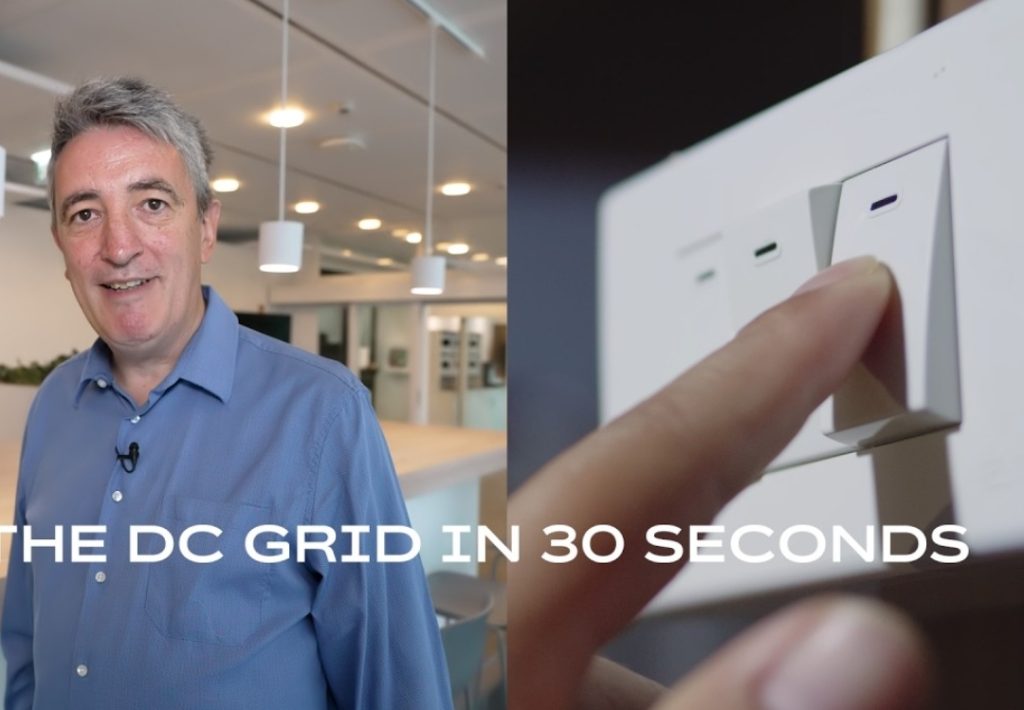
The electricity infrastructure powering the modern world may be approaching a major turning point. As AI data centers, electric vehicles, battery storage, and renewable energy drive demand for electricity, the dominance of traditional alternating current (AC) networks is facing a serious technological challenge.
For more than a century, alternating current has been the backbone of global electricity infrastructure. But the rapid expansion of digital infrastructure and power-hungry technologies is exposing the limitations of an electricity system designed for a very different era.
Direct current (DC), once largely pushed aside during the historic battle between Nikola Tesla and Thomas Edison, is now making an increasingly compelling comeback.
And this time, the stakes are much higher.
AI Data Centers Are Exposing the Limits of Traditional Power Infrastructure
The explosive growth of artificial intelligence is creating an unprecedented demand for electricity. Modern AI data centers require enormous amounts of power to operate increasingly sophisticated processors, cooling systems, and high-density computing infrastructure.
The problem is that much of today’s electricity infrastructure relies on AC, while many modern digital devices, batteries, solar installations, and electronic systems fundamentally operate on DC.
Every conversion between AC and DC requires additional equipment and introduces energy losses.
At gigawatt-scale data center campuses, even relatively small efficiency improvements could translate into substantial savings in electricity consumption and operating costs.
This is where hybrid AC/DC grid architecture enters the picture.
Instead of forcing electricity through multiple conversion stages, hybrid networks could allow AC and DC systems to operate more directly within the same infrastructure, potentially reducing losses, equipment requirements, and overall energy costs.
The Return of DC Is No Longer Just a Technological Experiment
According to a September 2026 report titled The Strategic Case for Hybrid AC/DC Power, developed by Boston Consulting Group (BCG) and ABB, the future electricity system is unlikely to be exclusively AC or DC.
Instead, the two technologies could operate side by side.
AC would likely retain its dominant position in transmission and regional electricity distribution, while DC could become increasingly important inside data centers, industrial facilities, commercial buildings, and other power-intensive environments.
The shift is already becoming visible.
Electric vehicles, photovoltaic systems, battery storage, and high-performance computing all strengthen the case for more extensive DC infrastructure. Some AI data center architectures are also moving toward 800-volt DC distribution to accommodate rising power densities.
This is not simply about replacing one electrical technology with another. It is about redesigning how electricity is generated, distributed, converted, and consumed.
Three Arguments Against DC Are Losing Ground
For years, critics have questioned whether DC could become a practical alternative to conventional AC infrastructure.
However, several longstanding arguments are becoming increasingly difficult to sustain.
First, DC is no longer limited to niche applications. It is already used across a wide range of technologies, from low-voltage electronics and electric vehicles to high-voltage transmission and offshore wind connections.
Second, safety concerns surrounding DC protection are being addressed through advances in solid-state and hybrid circuit breakers. These technologies can interrupt electrical faults within microseconds, helping make DC networks more practical.
Third, while certain DC components remain relatively expensive, the overall economics can be more attractive when reduced conversion equipment, lower copper requirements, battery integration, and higher power density are taken into account.
However, these advantages are not automatic. Actual savings depend on system design, operating conditions, equipment costs, and the scale of deployment.
The Real Obstacles: Standards and a Shortage of Skilled Engineers
Despite the technological progress, the transition toward hybrid AC/DC infrastructure faces significant challenges.
One of the biggest obstacles is the lack of globally harmonized DC standards. Different technical requirements across markets can increase engineering complexity, complicate integration, and slow commercial adoption.
Another major problem is the shortage of engineers and technicians with specialized expertise in DC system design, protection, commissioning, and maintenance.
Without a sufficiently skilled workforce and consistent technical standards, even promising technologies could struggle to move beyond pilot projects and early commercial deployments.
These are not minor implementation issues. They could determine how quickly hybrid electricity networks become commercially viable.
ABB Sees a Strategic Opportunity in the Next Generation of Power Infrastructure
For ABB, the growing interest in DC represents more than a technological development. It is also a strategic opportunity in the rapidly expanding market for electrification, automation, and power electronics.
The company has a long history in DC technology, dating back to its early power conversion equipment and subsequent developments in industrial drives and power electronics.
Its latest push for hybrid AC/DC infrastructure reflects a broader industry trend: electricity networks must evolve to accommodate increasingly complex energy demands.
But the bigger question is whether utilities, governments, data center operators, and industrial companies are prepared to invest in the infrastructure required to make that transition happen.
The Electricity Revolution Will Be About Efficiency, Not Just More Power
The global AI race is often discussed in terms of processors, computing capacity, and semiconductor manufacturing. Yet electricity infrastructure could become one of its most important constraints.
Building more data centers without fundamentally improving how electricity is delivered and consumed could increase costs, intensify pressure on power grids, and create additional infrastructure bottlenecks.
Hybrid AC/DC networks offer a potential solution, but they are not a universal replacement for existing electricity systems.
The next phase of electrification will likely depend on how effectively the industry combines AC and DC technologies, modern power electronics, intelligent grid management, and more efficient energy storage.
The century-old dominance of AC is not necessarily coming to an end. But the assumption that AC alone is sufficient for the digital economy may no longer hold.
As artificial intelligence reshapes the global economy, the next major battle may not be over who builds the most powerful chips. It may be over who can deliver electricity more efficiently.