
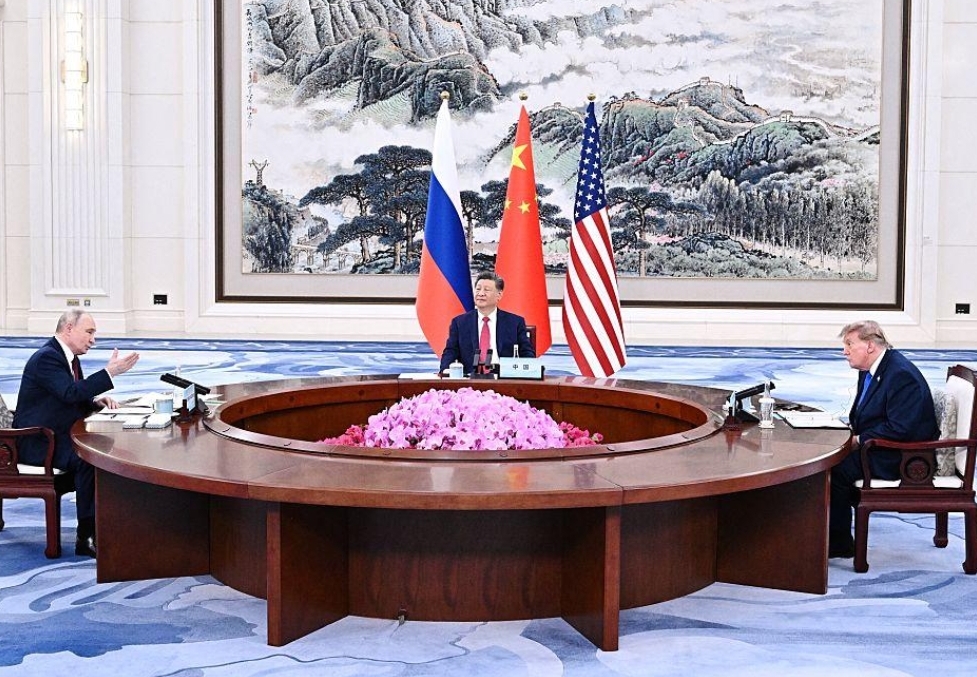
The leaders of the United States, China, and Russia have held an unprecedented trilateral summit in Shenzhen, China, exposing both the growing importance of great-power diplomacy and the difficulty of resolving the world’s most dangerous geopolitical conflicts. Despite promises of cooperation and a joint declaration on international security, the meeting produced no concrete breakthrough on Ukraine, Iran, or nuclear arms control.
November 25, 2026 | World Politics
The world’s three most influential geopolitical figures have come together for a diplomatic meeting that could shape the international political landscape for years to come.
US President Donald Trump, Chinese President Xi Jinping, and Russian President Vladimir Putin met on November 19 on the sidelines of the APEC summit in Shenzhen, China.
The approximately 90-minute meeting attracted international attention because it brought together leaders whose governments have fundamentally different strategic interests but enormous influence over global security, trade, technology, and military affairs.
The summit produced a joint declaration emphasizing international cooperation, United Nations reform, stable energy supplies, and the dangers of nuclear war.
However, behind the diplomatic language, the meeting exposed a significant problem: bringing powerful leaders together does not necessarily mean they are prepared to compromise.
Ukraine Remains a Major Obstacle
The war in Ukraine remains one of the most difficult issues confronting international diplomacy.
Russia continues to pursue its military objectives, while Ukraine maintains its position on sovereignty and territorial integrity.
Although Trump has repeatedly expressed interest in negotiating an end to the conflict, the trilateral summit failed to produce a concrete agreement.
Putin praised Trump’s diplomatic efforts but also maintained Russia’s security demands.
For Ukraine and its European partners, the central concern is whether negotiations between major powers could produce decisions affecting Ukrainian territory and security without sufficient Ukrainian participation.
The absence of a specific Ukraine settlement in the joint declaration demonstrated how far the parties remain from an agreed framework for peace.
Taiwan Remains China’s Strategic Red Line
Another important issue surrounding the summit was Taiwan.
Xi Jinping used the diplomatic encounter to emphasize China’s position on Taiwan and warn Washington against actions Beijing considers interference in its sovereignty claims.
For China, Taiwan remains a central national security and territorial issue.
For the United States, maintaining stability in the Taiwan Strait is a major strategic concern involving regional security, international trade, and semiconductor supply chains.
Any deterioration in relations across the Taiwan Strait could have consequences extending well beyond East Asia.
The summit did not resolve these competing positions.
Instead, it reinforced the importance of managing tensions between Washington and Beijing to prevent diplomatic disagreements from escalating into a broader confrontation.
Nuclear Security: Serious Words, Limited Commitments
Nuclear security was another major subject of discussion.
The three countries possess enormous nuclear capabilities, making their relationship particularly important to international arms control.
Their joint declaration reaffirmed that nuclear war cannot be won and must never be fought.
However, the meeting did not establish a new nuclear arms-control framework.
This is particularly significant as the future of strategic arms agreements between Washington and Moscow remains uncertain, with the New START treaty approaching its expiration in February 2027.
Without a replacement agreement or another effective verification mechanism, the international community faces greater uncertainty about the future of strategic nuclear stability.
Trump’s Personal Diplomacy Faces Its Limits
Trump has frequently presented direct negotiations between national leaders as an effective way to resolve international disputes.
His diplomatic approach emphasizes personal relationships, high-level meetings, and negotiated arrangements.
But the Shenzhen summit illustrates the limitations of this strategy.
International conflicts are rarely driven by personalities alone. They involve military calculations, domestic political pressures, economic interests, territorial disputes, and long-term national security objectives.
Xi and Putin have their own strategic priorities, which cannot simply be changed through diplomatic gestures.
According to Reuters analysis, Trump’s personalized approach to diplomacy has encountered significant limitations in dealing with the competing interests of other major powers.
Is the World Moving Toward a New Geopolitical Order?
The summit raises a broader question about the future of international relations.
For decades, the United States played a central role in shaping the international political and economic system.
However, China’s growing economic and military influence, Russia’s confrontation with Western governments, and increasing divisions within international institutions are contributing to a more complicated geopolitical environment.
The appearance of Trump, Xi, and Putin at the same negotiating table reflects the importance of direct engagement among major powers.
But it also raises concerns about whether global affairs are increasingly being shaped through agreements among a small number of powerful governments.
Smaller countries, developing economies, and regional organizations could face difficult choices as competition between major powers intensifies.
For Southeast Asia, maintaining strategic independence and avoiding excessive dependence on any single major power will remain important diplomatic challenges.
A Summit Without a Breakthrough, but With Global Consequences
The Shenzhen meeting should not be dismissed simply because it failed to produce a major agreement.
Direct communication between Washington, Beijing, and Moscow can help reduce misunderstandings and establish channels for managing international crises.
However, diplomatic symbolism must eventually translate into measurable outcomes.
The wars in Ukraine and Iran, tensions surrounding Taiwan, and uncertainty over nuclear arms control remain unresolved.
The international community will therefore judge the significance of this meeting not by the photographs of three presidents sitting together, but by whether their governments take meaningful steps toward reducing global tensions.
The world witnessed three powerful leaders sharing one negotiating table. But the real test of global diplomacy begins after the cameras are turned off.