
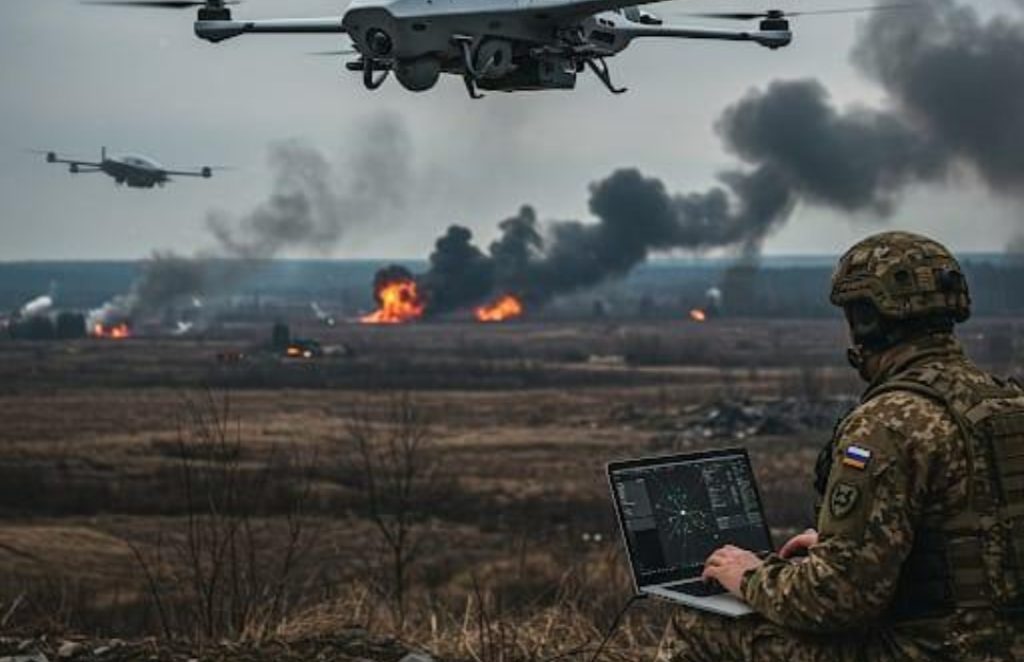
The United Nations is raising the alarm over the rapid militarization of artificial intelligence, warning that autonomous weapons and AI-powered military systems could fundamentally change warfare. With international negotiations struggling to produce binding regulations, the world faces an increasingly urgent question: who will be held responsible when machines make life-and-death decisions?
November 25, 2026 | United Nations & Global Security
The United Nations is confronting a new generation of security threats as artificial intelligence transforms the way countries prepare for and conduct military operations.
From autonomous drones and AI-assisted targeting systems to increasingly sophisticated battlefield surveillance, emerging technologies are changing military capabilities at a speed that international law and diplomacy are struggling to match.
Speaking before the UN Security Council on November 24, Secretary-General António Guterres delivered a stark warning about the dangers of allowing machines to take control of decisions involving human life.
His message was direct: killer robots must have no place in the future of humanity.
The warning comes as governments accelerate investment in military artificial intelligence while international efforts to establish enforceable restrictions remain deeply divided.
AI Is Changing the Nature of Modern Warfare
Artificial intelligence is no longer a distant possibility in military operations.
AI-assisted systems can analyze enormous volumes of battlefield information, identify potential targets, support military planning, and accelerate decision-making.
Autonomous and semi-autonomous drones are also changing military operations by reducing the need for direct human control during certain tasks.
These technologies offer potential military advantages, including faster responses, improved surveillance, and reduced risks to personnel.
But they also create serious dangers.
An algorithm can misidentify a target, process incomplete information, or operate in circumstances that its designers did not anticipate.
When such systems are integrated into weapons, the consequences of technological failure can be irreversible.
The central concern is whether humans will retain meaningful control over decisions that determine who lives and who dies.
International Negotiations Have Failed to Deliver a Binding Agreement
The diplomatic challenge is becoming increasingly urgent.
During negotiations in Geneva in November, approximately 100 countries supported efforts to advance discussions toward a legally binding instrument on lethal autonomous weapons.
However, the initiative failed to achieve the necessary progress.
The disagreement reflects different national positions on military autonomy, technological development, national security, and the scope of international restrictions.
Some governments support legally binding rules that prohibit or strictly regulate weapons operating without meaningful human control.
Others remain concerned that overly restrictive regulations could limit military innovation or interfere with national defense capabilities.
The absence of an internationally agreed framework leaves important questions unresolved.
There is still no comprehensive global treaty specifically governing all lethal autonomous weapon systems.
The Responsibility Problem: Who Is Accountable When AI Kills?
One of the most difficult questions concerns accountability.
If an autonomous weapon mistakenly attacks civilians, determining responsibility can become extremely complicated.
Should responsibility rest with the military commander who authorized deployment?
The government that purchased the system?
The company that developed the software?
Or the individuals responsible for designing and programming the technology?
Existing international humanitarian law continues to apply to armed conflicts, including requirements concerning distinction, proportionality, and precautions in attacks.
However, applying those principles to increasingly autonomous systems raises difficult legal and operational questions.
The United Nations is warning that technological advancement cannot become an excuse for weakening human responsibility.
Machines may assist military operations, but governments and individuals must remain accountable for their decisions.
Disinformation Is Becoming Another Weapon of War
The UN’s concerns extend beyond autonomous weapons.
Artificial intelligence is also making it easier to produce convincing fake images, manipulated videos, fabricated statements, and automated propaganda.
These capabilities can be used to manipulate public opinion, create confusion during military crises, and undermine trust in democratic institutions.
In an international conflict, false information can spread faster than governments can verify events.
The consequences may include increased hostility, diplomatic misunderstandings, and escalation based on fabricated or misleading information.
For the United Nations, managing the risks of military AI therefore requires addressing not only weapons systems but also the broader information environment.
The Security Council Must Catch Up With Technological Change
The Security Council has begun giving greater attention to the relationship between technology and international peace and security.
A new informal expert group on technology, peace, and security held its first meeting on November 18.
The initiative reflects growing recognition that traditional approaches to international security are no longer sufficient to address the speed and complexity of technological change.
Guterres has called for stronger international cooperation to ensure that technological competition does not destabilize global security.
He has also emphasized that emerging technologies should support peacekeeping, conflict prevention, and humanitarian operations rather than intensify violence.
However, the effectiveness of these efforts will depend on whether major military powers are prepared to accept common rules.
Developing Countries Risk Being Left Out of the AI Security Debate
Another major concern is unequal access to technological expertise.
Wealthier countries have greater financial resources to develop advanced military AI, autonomous systems, and sophisticated cyber capabilities.
Many developing countries lack the infrastructure, technical expertise, and regulatory institutions needed to understand or respond to these technologies.
This imbalance could create new forms of international insecurity.
Countries with limited technological capabilities may become increasingly dependent on foreign military systems and technology providers.
The UN therefore faces a broader challenge: ensuring that international AI governance does not become an exclusive agreement among the world’s most powerful military and technology nations.
Developing countries must have a meaningful voice in shaping the rules governing technologies that could affect their security.
The World Cannot Wait for the First Major AI Weapons Disaster
The history of military technology demonstrates that international regulations often emerge only after devastating consequences become impossible to ignore.
Nuclear weapons, chemical warfare, and other military technologies have all generated international agreements after exposing the catastrophic consequences of uncontrolled development.
Autonomous weapons present a similar challenge, but the speed of technological progress makes delay particularly dangerous.
Waiting for a major tragedy before establishing international safeguards could leave the world responding to consequences that might have been prevented.
The United Nations is therefore urging governments to accelerate negotiations and establish meaningful international standards.
The debate is no longer simply about whether artificial intelligence should be used in warfare.
It is about determining which decisions must remain under human control, who is legally responsible for military actions, and whether technological progress should have internationally recognized limits.
Artificial intelligence may change the future of warfare, but it must never eliminate human accountability. The greatest danger is not simply that machines become more powerful. It is that governments become willing to surrender responsibility for the consequences of using them.